Metabolic disease - Friesen Group
His group is expected to become operational from November 2026.
Our focus is to explore the molecular mechanisms of metabolic disease by leveraging human pluripotent stem cell (hPSC)-derived in vitro disease models that accurately represent the in vivo cell state.
To this end, we have placed an emphasis on creating a more physiologically relevant environment for their cells, resulting in a platform that allows us to study insulin signalling and resistance at nutrient concentrations similar to those in the human body.
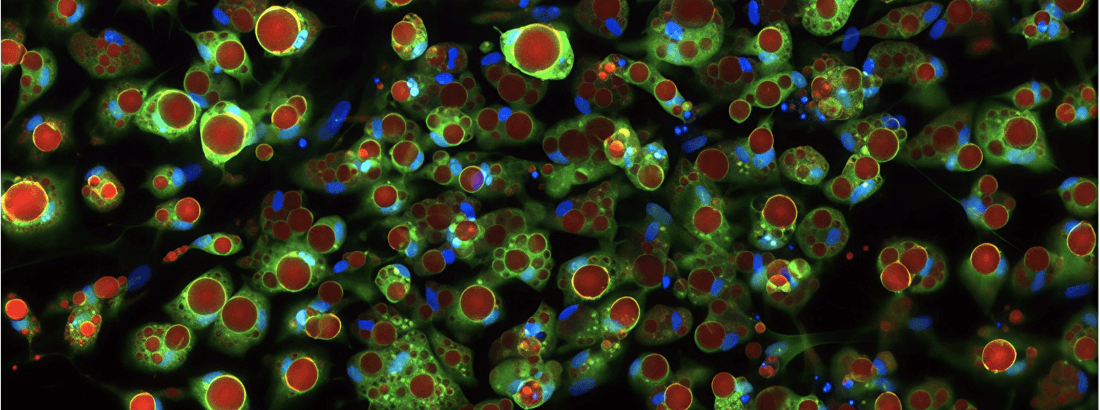
We set up this platform in hPSC-derived fat cells and thoroughly characterised that they mirror in vivo human fat cells. We then extended this to a large panel of other hPSC-derived cell types, including those from the brain, cardiovascular system, and metabolic organs, showcasing the generalisability of this approach and laying the foundation for our group's research.
Altogether, this gives us novel tools to molecularly understand how insulin resistance arises, perform translational research to identify metabolic disease therapeutics, and extend this platform into more and more complex in vitro organ systems.
Broadly, our projects fall into three categories; 1) understanding the molecular basis of how insulin resistance develops, 2) translational research to treat or prevent metabolic disease, and 3) development of better and more sophisticated in vitro disease model technologies.
Mechanistically, we are interested in delineating the vicious cycle through which insulin resistance worsens over time. We aim to delineate the feedback loop that exists between the insulin signalling cascade, gene expression, metabolism, and protein modifications, that altogether leads to reduced insulin response.
Translationally, we are working on reverting insulin resistance in their hPSC-derived disease models through a variety of genome editing and therapeutic screening approaches.
Technologically, we keep working on making hPSC differentiation protocols more physiologically relevant, expanding our metabolic disease platform to more and more cell types, and generating multi-cell type coculture models.
List of publications by Max Friesen
Selected publications
-
Friesen, M., & Jaenisch, R. (2026). Modeling physiological insulin sensitivity and pre-diabetic insulin resistance in multiple hPSC-derived cell types. Signal Transduction and Targeted Therapy, 11(1), 287.
-
Richards, A.*, Friesen, M.*, Whitfield, T. W., Gehrke, L., & Jaenisch, R. (2025). Healthy adipocytes provide a protective environment by limiting viral infection through cell-cell communication. bioRxiv, 2025-09.
-
Dall’Agnese, A.*, Platt, J. M.*, Zheng, M. M., Friesen, M., Dall’Agnese, G., Blaise, A. M., ... & Young, R. A. (2022). The dynamic clustering of insulin receptor underlies its signaling and is disrupted in insulin resistance. Nature communications, 13(1), 7522.
-
Friesen, M., Khalil, A. S., Barrasa, M. I., Jeppesen, J. F., Mooney, D. J., & Jaenisch, R. (2022). Development of a physiological insulin resistance model in human stem cell–derived adipocytes. Science Advances, 8(24), eabn7298.
-
Friesen, M.*, Warren, C. R.*, Yu, H.*, Toyohara, T.*, Ding, Q., Florido, M. H., ... & Cowan, C. A. (2020). Mitoregulin controls β-oxidation in human and mouse adipocytes. Stem Cell Reports, 14(4), 590-602.
The lab is open to collaborations across metabolism, metabolic disease models, and pushing the boundaries in stem cell-based in vitro models.
The research is funded by the Novo Nordisk Foundation Center for Stem Cell Medicine (NNF21CC0073729).
Human pluripotent stem cell-derived disease models form the basis of all our work, but we take a method agnostic approach to understanding metabolic disease.
Techniques we are using, or have used in the past, include:
- hPSC culture, differentiation, genome editing, and patient iPSCs
- -Omics approaches (transcriptomics, epigenomics, proteomics, metabolomics)
- Metabolic assays (glucose and lipid metabolism, Seahorse, etc.)