
Two new grants will support clinical translation of cell therapies for dementia and kidney disease
reNEW Melbourne and Copenhagen Principal Investigator Professor Melissa Little and reNEW Copenhagen Principal Investigator Associate Professor Agnete Kirkeby have both been awarded Novo Nordisk Foundation Regenerative Medicine Catalyst Grants to advance internationally collaborative regenerative medicine research.
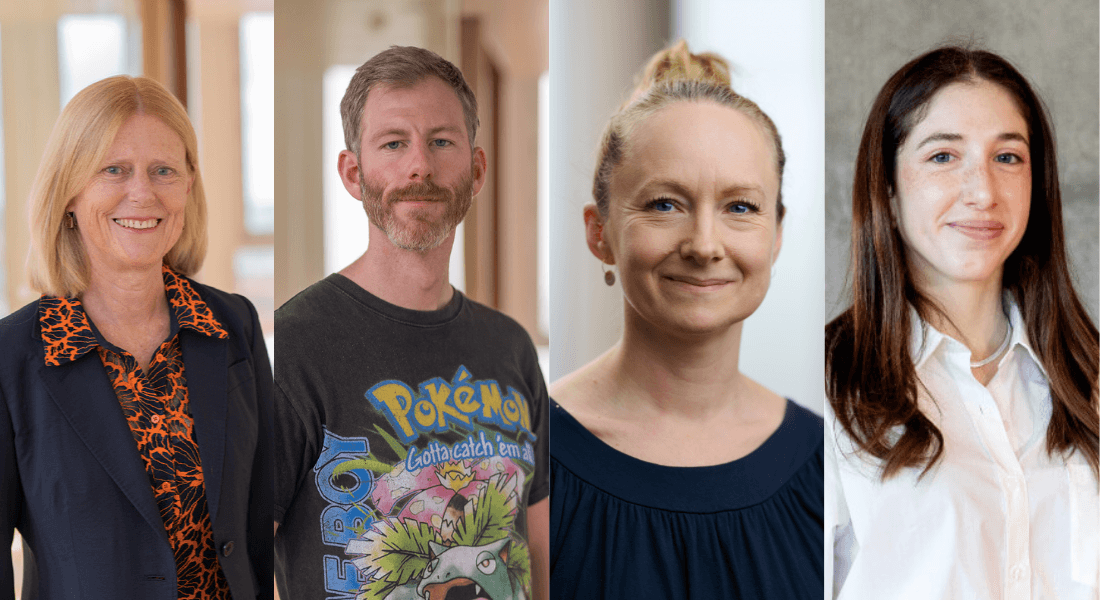
The Regenerative Medicine Catalyst Grants program provides funding to accelerate innovative solutions to key challenges in regenerative medicine, strengthen the Nordic regenerative medicine ecosystem, and promote international collaboration.
reNEW CEO and head of kidney research labs at both the Melbourne and Copenhagen nodes, Professor Little is internationally recognized for her pioneering work in directing pluripotent stem cells to form human kidney tissue. Over the past decade, her team has developed and applied kidney organoids to study genetic kidney disease, explore potential gene therapies, and advance platforms for drug toxicity screening. Her Copenhagen team has also pioneered a novel approach for generating kidney assembloids. This work, performed by Dr. Sean Wilson, is the first assembloid model in which nephrons are connected to a single ureteric epithelial exit path.
Enabled by this new grant, worth DKK 4.9M (EUR 655,700), Professor Little’s team will optimise the formation of such kidney assembloids and investigate the transplantation of these kidney assembloids into pre-vascularized host chambers.
This approach has been pioneered by Associate Professor Geraldine Mitchell at the St Vincent’s Institute in Melbourne.
‘Engineering kidney tissue to deliver renal replacement has long been a dream in the field,’ says Professor Little, ‘but the kidney is such a large and complex organ.’
‘We are using bioengineering principles to bring together the functional components, the nephrons, with an exit path for the urine. Proving that this can vascularise to form filtrate is a major objective.’
To ensure that the project succeeds, members of the Copenhagen team visited Melbourne earlier this year to transfer the differentiation protocol.
Associate Professor Agnete Kirkeby’s grant, worth DKK 10M (EUR 1,4M), will support the development of a stem cell therapy for dementia with Lewy bodies.
Dementia with Lewy bodies is a progressive brain disease characterized by the loss of cholinergic neurons, which correlates to cognitive decline and symptoms that may include memory loss and visual hallucinations. No treatments have been specifically developed for this disease, leaving patients and their families with a significant burden.
To address this unmet need, the Kirkeby lab is developing a stem cell therapy to restore the cholinergic neuron population in the brain. The Catalyst grant allows the team to advance the therapy towards the clinic, collaborating with the Novo Nordisk Foundation Cellerator, the University of Cambridge, and Nanyang Technological University (NTU) in Singapore.
The team will develop manufacturing procedures and quality control analytics necessary to ensure consistent production of a high-quality clinical cell product. They will also benchmark their cell product against human fetal material to assess if the lab-grown cells reflect the cholinergic neurons which exist in the human brain. Building on promising results from showing successful rescue of memory and attention deficits in a rat model of dementia, the team will further evaluate the cell product in preclinical studies using marmosets (a non-human primate), whose brain organization and cognitive function more closely resemble those of humans.
As part of the collaboration with NTU, PhD student Alison Salvador will go on an exchange to Singapore to set up the marmoset study.
“I’ve been involved in this project since my master thesis, six years ago. I’m very proud of how far we’ve gotten. It’s really fantastic to see how many of us believe and are willing to push this project further and further.”
Looking ahead, the team is optimistic about the therapy’s potential. While targeting dementia with Lewy bodies, the therapy also has indications of potential use for other diseases, including Parkinson’s disease with dementia. “If we can bring this to market, I believe it will represent a tremendous milestone for patients, their families, and society,” adds Postdoc Louise Saviø Piilgaard.