
Three BMI Early Career Collaboration Grants awarded
Three new research projects, led by early career researchers, have been awarded a BMI Early Career Collaboration Grant, worth DKK 50,000 each. These projects tackle different research questions, focusing on endometriosis and embryo implantation, the heart’s natural pacemaker, and the gut microbiome’s role in pancreatic islet inflammation, and bring together researchers across the institute.
‘We are pleased to support these three new projects. They create valuable synergies across our research environments and is a great example of the collaboration we want to encourage.
How does endometriosis affect embryo implantation?
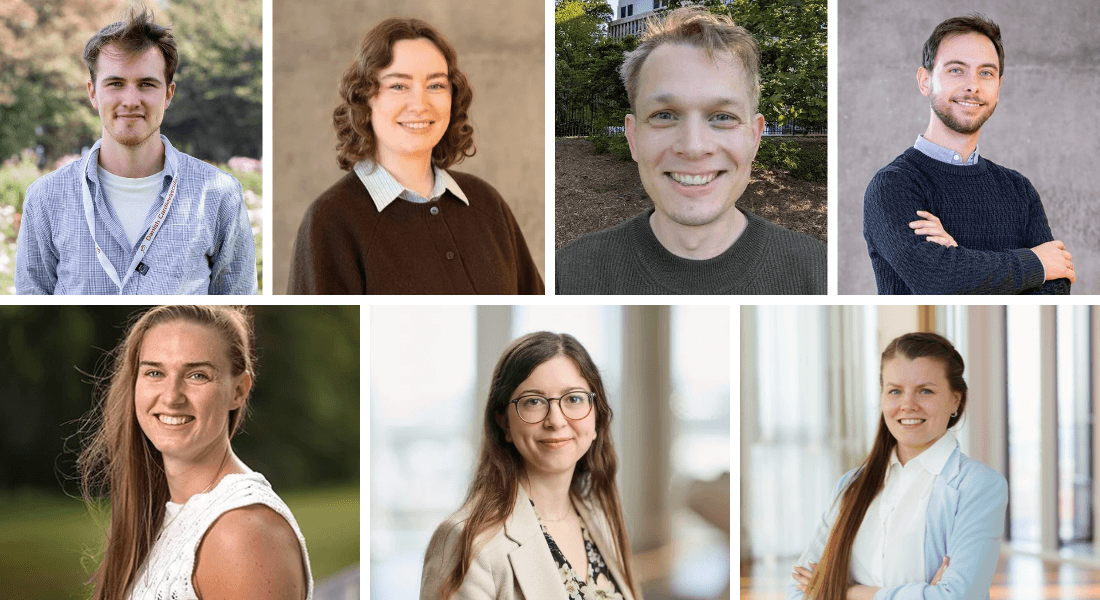
Kadi Lõhmussaar, Johanna Gassler and Sara Marthedal Jørgensen will study how endometriosis affects the endometrium's ability to support embryo implantation. They aim to identify disease-associated changes in endometrial proteins and establish a blastoid attachment model using endometriosis-derived endometrial organoids.
This three-way project brings together the Jensen and Żylicz labs at reNEW and the Davies lab at Integrative Circulation, combining expertise in endometriosis patient-derived organoids, stem cell-based embryo models and advanced proteomics.
‘‘This grant allows us to establish this new collaboration and generate preliminary data on the mechanisms underlying infertility in patients with endometriosis. It also provides a strong foundation for future research and funding applications,’’ said the team.
Mapping the heart’s pacemaker
Megan Katie McKie and Jonathan Samuel Achter will investigate the sinoatrial node (SAN), a small region of the heart that acts as its natural pacemaker. Within the SAN, specialized pacemaker cells generate the electrical signals that set the heart’s rhythm. Different groups of these cells can take the lead, causing the site of pacemaking to shift in response to physiological or disease-related stimuli. Their goal is to generate the first proteomic map of a functionally defined SAN subregion, linking its electrical activity to its underlying protein composition.
The project brings together the Bentzen and Lundby labs at Integrative Circulation, combining optical mapping, using calcium- and voltage-sensitive dyes to identify where precisely the electrical signal originates within the SAN, with spatial proteomics, which allows us to quantify thousands of proteins in the corresponding regions. This will enable us to directly link the electrical activity of the SAN to its underlying molecular composition.
"The grant will allow us to generate the pilot data needed to establish proof of concept for a new experimental workflow. This initial funding provides the resources to perform the experiments needed to evaluate the approach and, if successful, use the resulting data as a foundation for future funding applications,’’ said McKie and Achter.
How gut microbiota influences pancreatic islet inflammation
Sune Kjærsgaard Yang-Jensen and Thomas Daugbjerg Madsen will study specific O-glycans that they have found to be expressed in the pancreatic islets of mice. These glycans are known to be important in immune regulation, and the researchers have found that they disappear upon high-fat diet consumption or even on ultra-processed diets. They hypothesize that islet inflammation is controlled by a diet-microbiome-pancreas crosstalk that, when dysregulated, can lead to islet decline and predispose individuals on ultra-processed diets to the development of diabetes.
This project brings together the Benjamin Jensen lab and the newly started Daugbjerg Madsen lab at Translational Metabolism, combining orthogonal techniques from each lab, including iterative staining methods, animal models on advanced diets and fecal transplantation.
‘‘This grant allows us to perform critical proof-of-concept preclinical studies of microbiome depletions and fecal matter transplants, alongside advanced tissue imaging, to establish a causal role of the gut microbiome in regulating the pancreatic glycome. It will seed a new arm of research and strengthen collaboration within the institute,’’ they said.