
The online life of a stem cell
Ask a scientist what a stem cell is, and you will get a biological answer. Ask the internet, and you will get something else entirely. Anders Grundtvig from PREPARE Copenhagen spent his PhD studying the "online life" of stem cells.
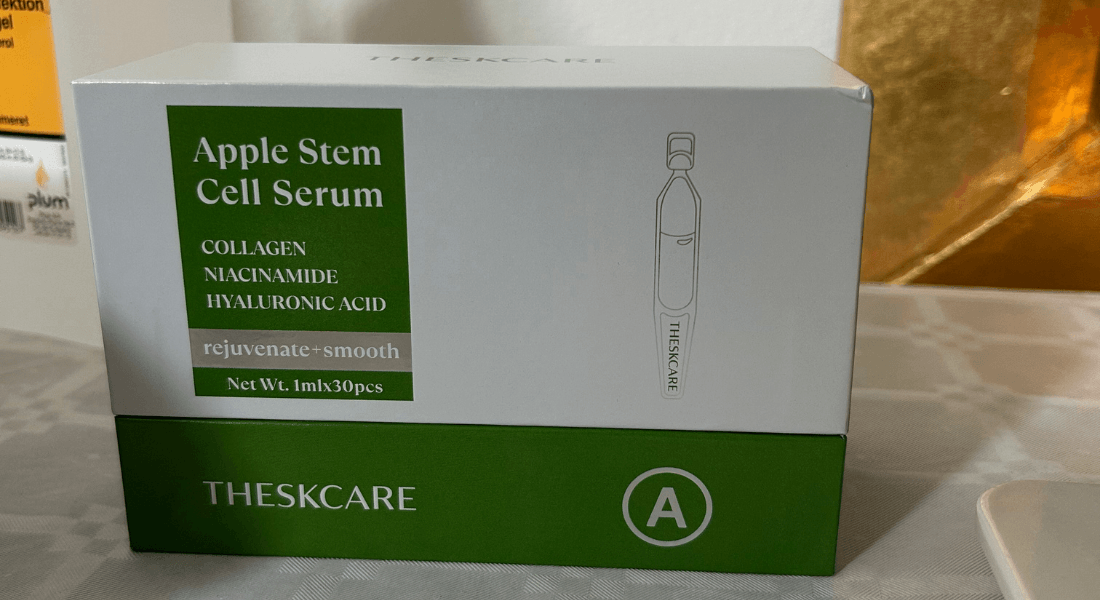
Online life is not just about information about stem cells existing online. It is what happens once that information enters the online world and gets shaped by the online environment. Grundtvig zoomed in on Google, the largest information ecosystem there is with search, YouTube, and the world’s biggest advertisement business, all in one place.
Different realities
Everyone in the stem cell field is aware of the unproven stem cell industry that operates largely online, through advertisements, YouTube and fancy websites with promising claims. At the same time, scientists themselves have their own definition of what a stem cell is. When researchers do outreach activities and explain what a stem cell is, people may still hold a different idea, partly shaped by what they have seen or read online. So beyond the biology, there is a symbolic level. What image or idea comes to mind when people hear the word stem cell? A tiny cell under a microscope, or something being injected into a YouTube strongman like Eddie Hall, "The Beast"? Scientifically, what a stem cell actually is may matter less than the image attached to it.
There is a similar gap when it comes to treatments. The unproven industry argues that even patients who are sick now should not have to wait. This turns the debate from simply ‘‘good’’ or ‘‘bad’’ stem cell treatments into one that is also about when something counts as ready.
That’s where PREPARE comes in. PREPARE is about preparing the public for stem cell treatments and connecting scientists with patients. With this project, Grundtvig brings the internet's version of stem cells back to stem cell researchers to prepare them for what is out there when they talk to the public. It is also a reminder that the stem cell community knows a lot about the ”biological life” of stem cells but less about the “online life” it simultaneously leads – which influence how patients might understand and perceive stem cell medicine.
Surprising findings
Three things stood out for Grundtvig in his research. First, the diseases people search for online have changed over the last decade or two from Parkinson’s, MS, and cancer toward far more mundane conditions, such as knee problems, joint pain and hair loss.
Second, stem cells do not just exist online as information. "It's not just information, but information adapting to the platform's own way of promoting things, thinking with the logic of advertising, rather than the logic of biomedicine," Grundtvig explains. In an analysis of 8,000 ads, Grundtvig found a Black Friday deal for stem cell therapy, treating it as an ordinary consumer product.
Third, there is the marketisation of stem cells. There is not just one stem cell market, there are many. His advertisement analysis uncovered a multiple markets. Unrelated platforms, like MapQuest, run stem cell ads with no real connection to stem cell medicine, purely to drive traffic to their own websites. Stem cells are gaining popularity online, drawing enough attention that even unrelated platforms find it worth targeting with ads. Advertising is the internet’s backbone and works on cost-per-click. Companies constantly hunt for keywords that are searched a lot but still cheap. Stem cells, it turns out, have become that kind of keyword.
Do you find information, or does it find you?
That same advertising engine makes Google an active mediator of information. We think of Google as somewhere we go to find things, but it works the other way too where information finds us. These two directions are closely intertwined. Every search and click leaves a trace, which Google uses to feed information back, through ads, YouTube suggestions, and autocomplete.
One cell, different lives
Stem cells lives biological lives in our bodies and in the petridish in the lab. But stem cells also live an online life. What a stem cell represents to someone scrolling the internet or watching YouTube is not the same as what it is under a microscope. It is thereby not just the information that makes the difference but how that information is being mediated by the platforms.
‘This does not make the online version simply wrong. Biologically speaking, yes, some of these claims are incorrect, but from the platform's perspective, they follow their own logic. It is less about labelling these as right or wrong, and more about recognising them as a different reality, one worth taking seriously rather than dismissing. ‘Knowing the difference is crucial, both for how we understand our own field, and for how we talk to the people we are trying to reach.’