
ODIN grant supports collaborative project “SynPhONY” to accelerate development of phage-based therapies
Antimicrobial resistance (AMR) is a global health challenge and is expected to cause more than 10 million deaths by 2050. Chronic wounds and urinary tract infections (UTIs) are particularly difficult to treat because antibiotic-resistant bacteria can protect themselves in ways that make today’s treatments non effective. This leaves patients with limited therapeutic options and highlights the unmet need for new, targeted solutions.
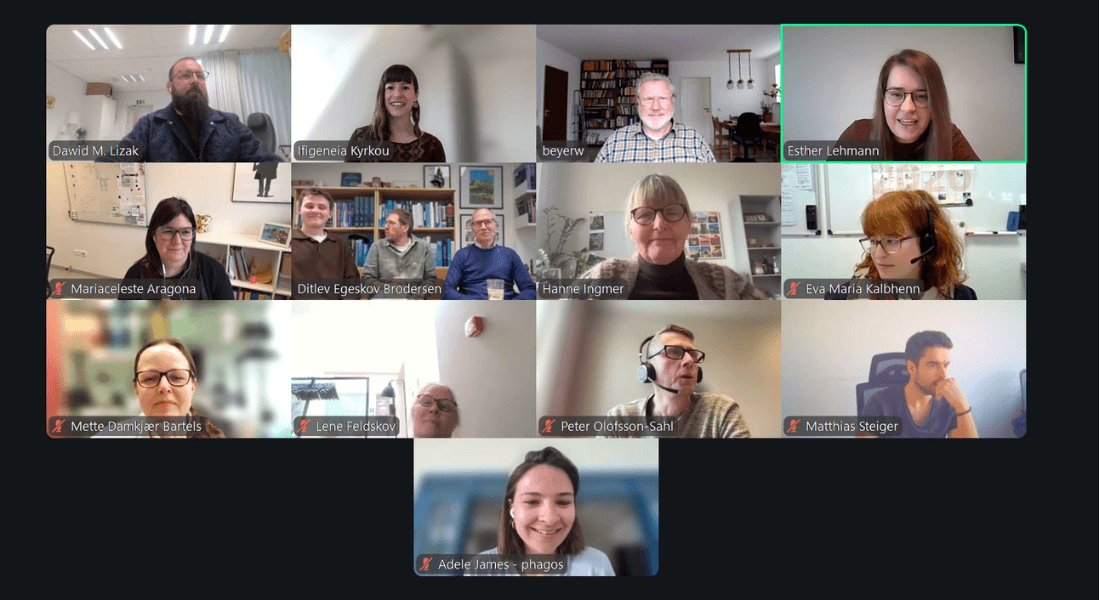
To address this challenge, an ODIN-funded collaborative project, led by Professor Hanne Ingmer from the University of Copenhagen’s Department of Veterinary and Animal Sciences, will bring together academic researchers and industry partners to develop next-generation tools for advancing phage-based therapies. Assistant Professor Ifigeneia Kyrkou and Assistant Professor Esther Lehmann played a key role in forming the consortium by pitching the project at ODIN events and connecting with the partners involved.
Phage therapy uses naturally occurring viruses that selectively kill harmful bacteria and offers a promising alternative when antibiotics fail. However, therapeutic success remains limited because we cannot yet predict how phages will behave inside the human body during real infection conditions. Existing animal models simply do not accurately mimic the complexity of human tissues or the way bacteria act during an infection, making it difficult to identify which phages will be most effective in patients.
To close this gap, Associate Professor Mariaceleste Aragona and her team from the Novo Nordisk Foundation Center for Stem Cell Medicine, reNEW, will develop scalable human skin and bladder infection models. These models will allow to test whether selected phages can safely and effectively eliminate harmful bacteria in wound and urinary infections. Industry and clinical partners will support this work by for example providing real-world bacterial samples from used wound dressings, catheters and urine.
In our effort to identify the next generation of therapeutic phages, phage libraries of our partners will be tested for their effectivity in the wound and urinary tract infection models, and new phages from hospital wastewater and patient materials will be isolated. Because phages exist in many variants, this project will also use pre-trained AI tools to aid future predictions of the most promising phages and build a clinically relevant phage library. By combining information from phenotypic assays, AI-guided phage selection, humanized UTI and wound infection models and real-world bacterial samples, the consortium aims to create a scalable screening that partners can use to accelerate the discovery of the next-generation phage-based treatments.
This outcome will be a fundamental tool for identifying effective phages faster and more reliably, helping pave the way for future treatments against AMR-related infections. In the long term, this work has the potential to curb antibiotic resistance, shorten treatment time and reduce the burden of long hospital stays.
The collaboration partners include:
The University of Copenhagen, Aarhus University, Novo Nordisk Foundation Center for Stem Cell Medicine, (reNEW), Hospital Amager & Hvidovre, Coloplast A/S, Invitris, Inicure AB, LABOKLIN GmbH & Co, and Phagos.