
Intestinal structure drives cell maturation
It has long been known that tissue shape and cell function are closely linked. A new collaborative study from Professor Kim Bak Jensen’s group at reNEW Copenhagen and Professor Matthias P. Lütolf’s group at the Roche Institute of Human Biology in Basel, Switzerland, published in Cell Stem Cell, reveals that tissue architecture can actively instruct how cells develop and function. Using the mouse small intestine as a model, the researchers demonstrated that the geometry of intestinal crypts, the structures that house stem cells, plays a decisive role in guiding immature cells toward fully functional adult cell types.
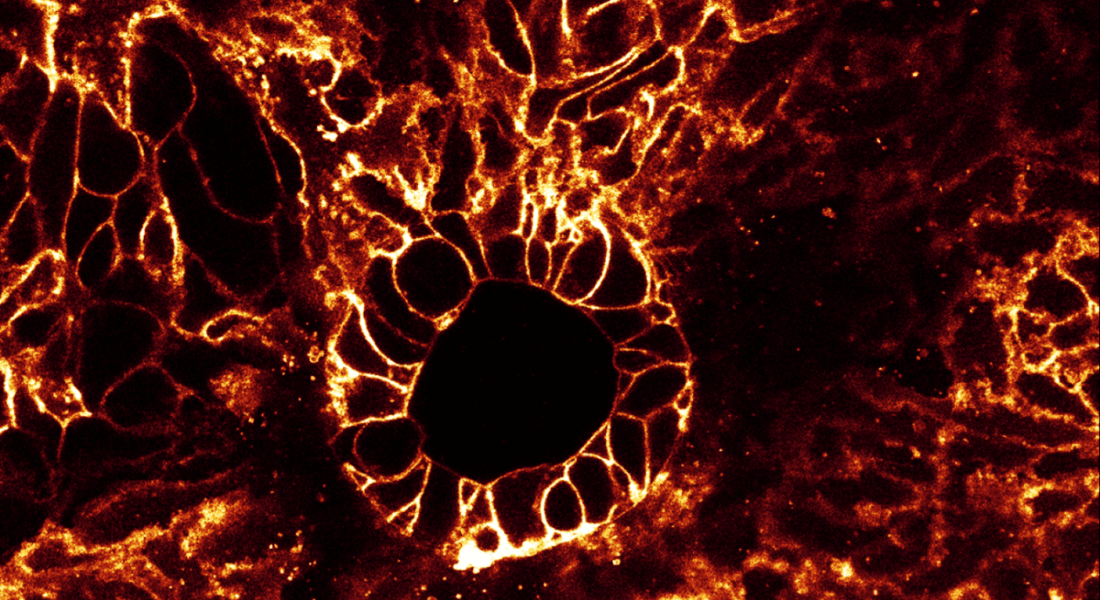
“For years, scientists have focused mainly on signaling pathways to guide stem cell differentiation in the lab,” explains reNEW Senior Scientist Martti Maimets, co-first author of the study. “But our results suggest that the physical architecture of tissues is just as important. While current protocols can reliably produce fetal‑like or early postnatal cell types from immature cells, pushing cells to reach full adult maturity has remained a major challenge.”
The other co-first author, Scientist Mike Nikolaev from the Institute of Human Biology, developed hydrogel scaffolds that mimic the geometry of natural intestinal crypts. “Organ development is a remarkably robust process. It is tightly choreographed by the interplay between the epithelium’s own self-organizing programs and signals from the surrounding tissues,” says Nikolaev. “We translated this idea into an in vitro system by engineering a scaffold that mimics real anatomy, allowing the tissue to form with a more realistic structure.”
Professor Matthias Lütolf here emphasizes the importance of collaboration. “We have brought together deep expertise in stem cell biology and bioengineering from our teams to advance technologies for developing more accurate models of human tissues,” he says.
When fetal intestinal cells are grown on these crypt-like scaffolds, they begin to mature. Over time, they express adult markers and organize into distinct cell types in patterns that resemble those seen in real intestinal tissue. A key molecular player in this process is the signaling protein YAP1, which is known to respond to mechanical and structural cues. By experimentally altering YAP activity, the researchers were able to either promote or block epithelial maturation in engineered tissues. Similar effects were observed when YAP signaling was modulated in living mice, supporting the broader relevance of the findings.
“The fundamental question has been whether tissue structure simply reflects function, or whether it actively guides it,” Maimets adds. “Our results strongly support the idea that architecture itself sends instructions to cells.”
By identifying tissue geometry as a direct regulator of cell maturation, the study highlights an often overlooked aspect of development and opens new directions for bioengineering approaches in regenerative medicine. “If we combine what we know about growth factors with the structural cues present in real tissues,” Professor Kim Bak Jensen concludes, “we may finally gain better control over how cells mature. This could lead to improved disease models and, in the long term, better cell-based therapies where cell quality is critical.”
This work was supported by EU Horizon 2020 (INTENS 668294, STEMHEALTH ERCCoG682665, 770877-STEMpop). The Novo Nordisk Foundation Center for Stem Cell Medicine is supported by Novo Nordisk Foundation grant #NNF21CC0073729.
Find the scientific paper here.