The work, published in EMBO Journal, was carried out by five laboratories led by Graziano Martello (University of Padua), Martin Leeb and Nicolas Rivron (Vienna BioCenter), Vincent Pasque (University of Leuven), and Jan Żylicz. Initially sparked by informal discussions and shared preliminary observations between the research groups, they demonstrated that naive human pluripotent stem cells can be stably maintained on dishes coated with bovine serum, thereby eliminating the need for MEFs.
“On a superficial level it seems almost too simple,” Associate Professor Jan Żylicz notes, “but in practice, it has revolutionised how we can model early human development at scale.”
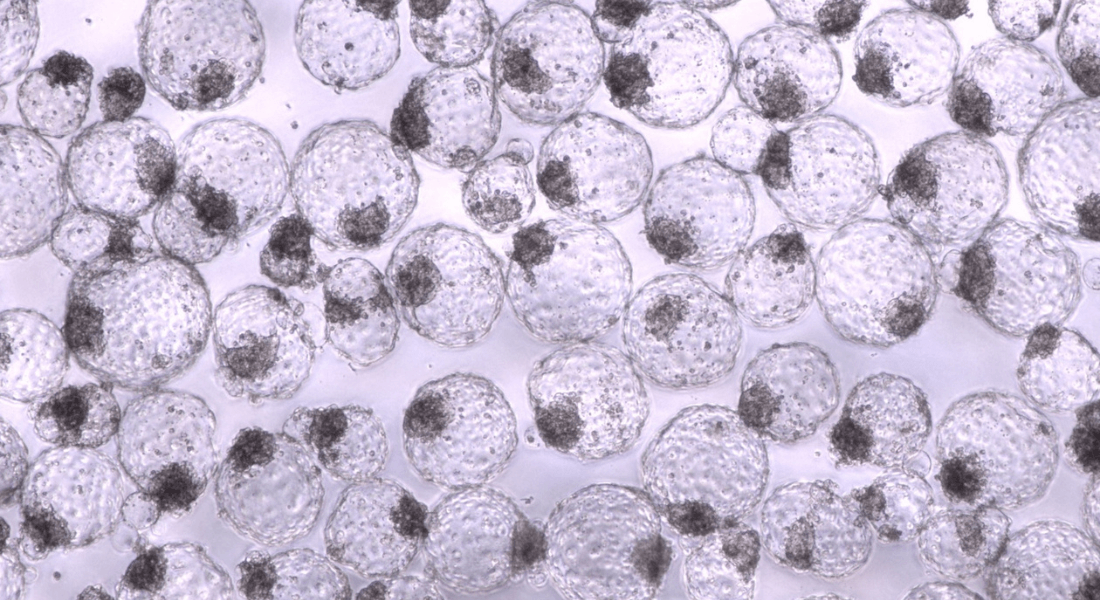
Across the participating laboratories, naive human pluripotent stem cells grown on serum-coated plates displayed normal growth and maintained the molecular characteristics of naive pluripotency. They retained full functional capacity and could still form the major early embryonic and extraembryonic lineages. They also efficiently generated blastoids, which are cellular structures that model the human blastocyst stage.
Using serum coating dramatically increases reproducibility and scalability. MEF batches are small and highly variable, whereas serum can be purchased in large, consistent batches and validated once. This enables researchers to perform mechanistic and biochemical analyses in a clean system, as cells can be expanded in larger quantities in a less costly and less labor-intensive manner.
The authors emphasise the importance of collaboration and open exchange. Many key assays were independently repeated in at least four laboratories, strengthening the reliability of the findings.
“It just works. And because it works across different cell lines, different labs, and different hands, we believe it will be widely adopted,” says PhD student Ida Sophie Brun, who is co-first author of the research article.
The new method enables highly robust, large‑scale generation of stem cell-based human embryo models and opens the door to studying early developmental disorders, drug testing, and performing high-throughput research that was previously out of reach.
The authors hope that the simplicity and accessibility of the system will accelerate progress across the entire field of human developmental biology.
View the scientific paper here.
17 March 2026
Breakthrough in early-stage human development research
Publication
Naive human pluripotent stem cells resemble those of the earliest human embryo. Associate Professor Jan Żylicz’s research group at reNEW Copenhagen has co-led an international collaboration to establish a robust method for growing naive human pluripotent stem cells without the need for mouse embryonic fibroblasts (MEFs), which have until now been the standard requirement. MEFs have long been a bottleneck for the field, not only due to their cost and labor demands but also because they introduce batch variability and contaminate downstream analyses with mouse cell material.