A multidisciplinary team led by Associate Professor Agnete Kirkeby from reNEW at the University of Copenhagen has been awarded nearly 60 million DKK (9 million USD) through the Aligning Science Across Parkinson’s (ASAP) initiative, in partnership with The Michael J. Fox Foundation for Parkinson’s Research (MJFF), to investigate how environmental toxicants may contribute to the risk and development of Parkinson’s disease. The team will join ASAP’s Collaborative Research Network (CRN), an international, multidisciplinary, multi-institutional network working to address high-priority research questions about Parkinson’s disease. The consortium combines expertise across epidemiology, neurology, toxicology, stem cell biology, animal modeling, and advanced exposomics, forming one of the most comprehensive efforts to date to uncover the environmental drivers of Parkinson’s disease.
Parkinson’s disease is the fastest-growing neurodegenerative disorder worldwide, projected to affect more than 25 million people by 2050. While aging is a major risk factor, genetics alone account for only a minority of cases. Environmental exposures such as pesticides and industrial chemicals have long been suspected contributors, and although many known toxicants have been banned in Europe since the mid-1990s, the incidence of Parkinson’s disease continues to rise more rapidly in several European countries than in the United States. This discrepancy suggests that still today additional, currently unrecognized environmental factors may be contributing to disease risk.
The consortium aims to identify these toxicants by integrating epidemiology, clinical research, untargeted chemical exposomics, toxicology, and advanced stem cell modeling. Instead of following a traditional linear research path, the project is structured as an interconnected research network, where insights from one field continuously guide the others. This agile design enables rapid verification of emerging candidate toxicants across different biological and population-level systems.
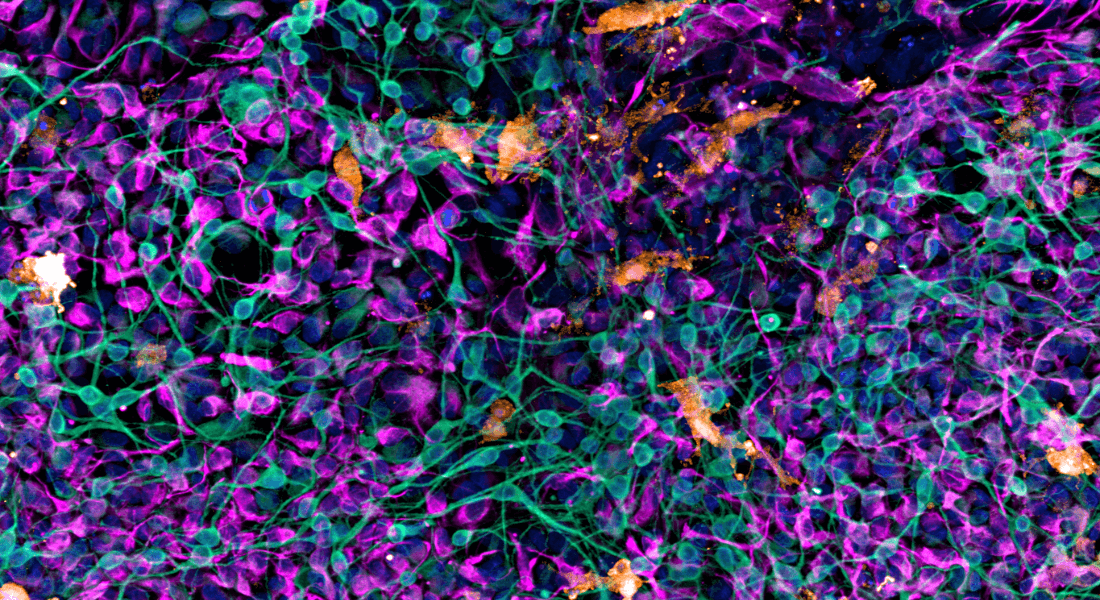
A central component of the project involves the analysis of thousands of urine samples from individuals with and without Parkinson's disease. The use of state-of-the-art non-targeted mass spectrometry will allow the researchers to monitor hundreds of chemicals in each individual to identify environmental toxicants that are more prevalent in people with Parkinson’s disease. These candidate chemicals will be funneled directly back into laboratory screening pipelines using human stem cell-derived neuronal cell models to test whether they induce molecular hallmarks of Parkinson’s pathology.
Epidemiological analyses of nationwide Danish registries will further determine whether certain chemicals are associated with a long-term risk of developing Parkinson’s disease in the population. Candidates from either approach will further be evaluated in animal models of Parkinson’s disease.
“This generous grant has enabled us to assemble an entirely new and ambitious interdisciplinary consortium to study how environmental toxicants may be linked to Parkinson’s disease,” says Dr. Kirkeby. “The project will require close collaboration between all scientists in the consortium, and we will be guiding each other on which direction to follow.”
“By investigating how the environment helps drive Parkinson’s, this team is uncovering the diverse biological drivers of the disease,” said Sonya Dumanis, PhD, managing director of ASAP. “This is exactly the kind of bold, integrative science the Collaborative Research Network is designed to accelerate. With a better understanding of these disease mechanisms, we can lay the groundwork for new, personalized therapeutics and better outcomes for Parkinson’s patients.”
The consortium aims to generate evidence capable of informing future public health and regulatory decisions, helping to protect the health of generations to come.
Consortium partners
From University of Copenhagen: Agnete Kirkeby (Novo Nordisk Foundation Center for Stem Cell Medicine, reNEW), Nikoline Juul Nielsen ( Department of Plan and Environmental Sciences) and Lisbeth Knudsen, and (Institute of Public Health) from the University of Copenhagen; from Aarhus University: Per Borghammer (Department of Clinical Medicine) and Marina Romero-Ramos, Poul Henning-Jensen (Department of Biomedicine); from University of Southern Denmark: Annette Kjær Ersbøll (National Institute of Public Health); from Netherlands: Harm Heusinkveld (Dutch National Institute for Public Health and the Environment; from Luxembourg: Rejko Kruger (University of Luxembourg); from USA: Beate Ritz (UCLA)University of California; from European Food Safety Authority: Susanne Hougaard Bennekou.
11 May 2026
60 million DKK award to identify hidden environmental risk factors in Parkinson’s disease
Grant
International consortium integrates advanced toxicological analyses, stem cell- and animal models, population-based epidemiology and clinical insights to uncover environmental factors that may contribute to Parkinson’s disease.